About IRMC
About Us
A high-standard reproductive center in Bishkek, built on U.S. assisted-reproduction technology.
A high-standard reproductive center in Bishkek, built on U.S. assisted-reproduction technology.
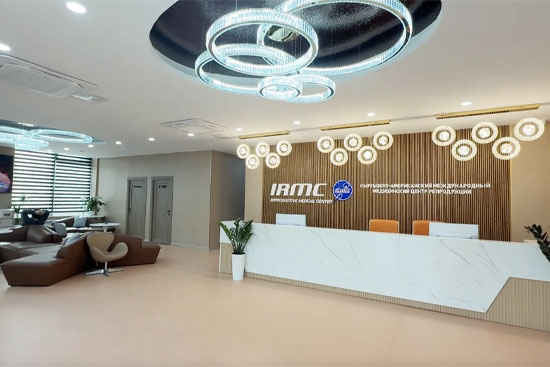
IRMC (Kyrgyzstan–America Reproductive Medicine Center) is built on advanced U.S. assisted-reproduction technology. It is a high-standard reproductive center focused on assisted reproduction and fertility preservation, located in an upscale district of Bishkek, the capital of Kyrgyzstan.
The center's medical environment, laboratory specifications and equipment are built strictly to the highest U.S. standards, with medical technology shared in step with U.S. assisted-reproduction practice. Our starting point is simple: to let Chinese families hoping to have a baby through assisted reproduction receive the same standard of care and attentive service in a neighboring country, without traveling across oceans.
For the whole team, technical terms are only the entry point; what truly determines the experience is execution — the review of every report, the double-check at every sample handover, every call placed across time zones. That is where we put our energy.
Clinicians, embryologists and the coordination team work together so that medical decisions and practical arrangements move forward in step.
Purification, culture, verification and storage — four stages managed independently yet linked into a closed loop.
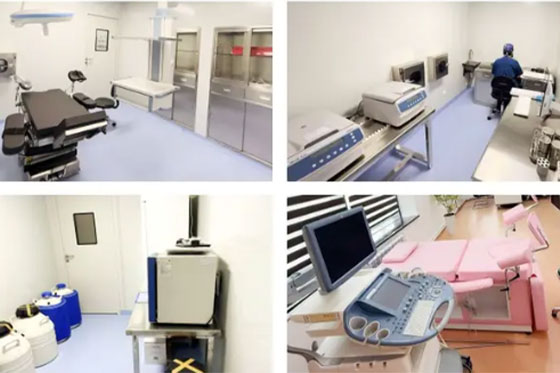
Class-100 laminar-flow workstations with HEPA filtration and pressure-differential zoning.
Low-oxygen tri-gas incubators with controlled temperature fluctuation.
Continuous in-incubator imaging reduces disturbance from removing embryos for observation.
Written verification at key nodes plus barcode management; every action is recorded.
The maturity of a reproductive center depends on how it was built.
Site selected in a core residential district of Bishkek, with overall planning following the cleanliness and workflow requirements of an embryology laboratory.
Introduced micromanipulation, tri-gas incubators, time-lapse imaging and liquid-nitrogen storage equipment, and established a batch-number traceability system for consumables.
Established case discussion and protocol sharing with the U.S. reproductive team, forming a joint two-site evaluation process.
Formed a service team covering consultation, accompaniment, interpretation and daily-life coordination, connecting the entire cross-border process.
Established double verification, environmental testing and storage inventory audits, with annual third-party review.
In cross-border treatment, compliance and privacy are part of the care itself.
Medical practice license approved by the local health authority
Operating SOPs and quality-control records maintained in bound form
Tiered record access authorization and barcode sample traceability
Consultation and travel/accommodation coordination
We can arrange a video tour in Chinese — see the laboratory, the workflow and the storage area — before you decide whether to travel.