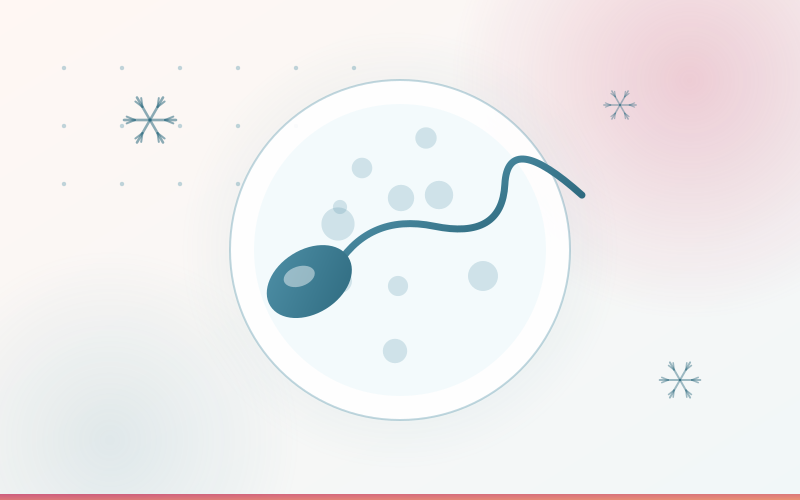
Embryos obtained from culture are preserved in liquid nitrogen by vitrification and thawed for transfer at the appropriate time, allowing embryos from a single stimulation cycle to be used on multiple occasions.
The following is for reference only; suitability must be determined by a physician based on test results.
The overall process is as follows; actual milestones are adjusted according to test results and individual response.
Embryo morphology and development rate are scored and archived
Cryoprotectant is prepared and equilibration time controlled
Ultra-rapid cooling avoids ice-crystal formation; loaded onto a dedicated carrier
Labels registered and stored in the liquid-nitrogen vapor-phase system
Endometrium prepared in a natural or artificial cycle
Survival is assessed after thawing, followed by single blastocyst transfer
These are our specific requirements at the execution level, and they can also be inspected on site during a visit.
Vitrification turns cell contents into a glass-like state, reducing ice-crystal damage
The liquid-nitrogen storage system features continuous level and temperature monitoring
One retrieval cycle can support multiple subsequent attempts
Electronic records are kept of the freezing, thawing and disposition of every embryo
A certain proportion of embryos is lost during freezing and thawing, depending on embryo quality, freezing technique and operating conditions.
Subject to local regulations, the storage agreement and storage conditions; the center will renew and confirm with you annually.
Transfer is usually completed on the day of thawing, though a separate cycle may be arranged depending on endometrial condition.
The content of this site does not constitute medical advice. Assisted reproduction offers no guaranteed outcome; the specific plan is subject to in-person assessment by a licensed physician.
Fertilization and embryo culture are completed in vitro, with genetic testing before transfer to select chromosomally normal embryos. Protocols are jointly assessed by reproductive specialists in China and the U.S. throughout…
Processed sperm is stored long-term in liquid nitrogen at -196℃. Suitable for men planning to delay fatherhood, those who must undergo cancer treatment first, or those unable to be present on the day of egg retrieval…
Mature oocytes are retrieved after ovulation induction and stored in liquid nitrogen following vitrification, preserving the possibility of thawing, fertilization and transfer later. Generally, the younger the woman, the better the egg quality. …
Send your test reports and we will provide a preliminary assessment and timing recommendations.